Pharamcovigilance

Pharamcovigilance

Pharmacovigilance  the science related to detection , assessment , understanding and prevention of adverse effect , particularly long term and short term side effect of medicines.
Generally speaking, Pharmacovigilance is the collecting, monitoring, searching and evaluating information from healthcare providers and patients on the adverse effect of medication, biological products, herbalism and traditional medicines with a view to:
1)     Identified new information about hazards associated with medicines
2)     Preventing harm to patients
The etymological routes are: pharmacon (Greek), “Drugs”, and Vigilare (Latin), “to keep away or alert, to keep watch”.


Pharmacovigilance is particular is concerned with adverse drug reaction, or ADRs, which are prescribed as: “A response to a drug which is noxious and unintended, and which occurs at doses normally used for the prophylaxis, diagnosis or therapy of disease, or for the modification of physiological function “. Pharmacovigilance is gaining importance for doctors and scientists as the number of stories in the mass media of drug recalls increases.
                                                             
Because Clinical trials involve several thousand patient at most ; less common side effects and ADRs Are often unknown at the time drug enters the market, Even very sever ADRs , Such as liver damage , are often undetected because study population are small. Post marketing Pharmacovigilance uses tools such as data mining and investigation of case reports to identify the relationship between drugs and ADRs.

By Sourabh Kushwah (B.Sc. Bio.tech.) and Vishal Kushwah (B.sc. Microbiology)

Bionic Eye & Lanes

Bionic Eye & Lanes

Introduction

Bionic eye is a bio-electronic eye. Bionic eye replaces the functionality of a part or whole of the eye. An external camera is worn on a pair of dark glasses which sends the images in digital form to the radio receiver placed in the eye. The radio receiver is attached to the implant chip on the retina. The implantation is of two types, epiretinal implant and subretinal implant, based on whether the implant is placed on or behind the retina. In our proposed method of bionic eye, a small and a powerful camera powered by nanogenerator, is implanted inside the patient’s eye rather than worn on a pair of glasses. The camera is small and consumes very low power.

*The Human eye

Structure and function The Human eyes operate on the same principle as that of a camera. The Human eye is an organ that reacts to light for several purposes. The Human eye ball is roughly spherical in shape. The important part of the eye responsible for the vision is the retina. The retina is a light sensitive tissue lining the inner surface of the eye. Light falling on the eye is focused on to a sheet of light sensitive cells. The photosensitive ganglion cells in the retina that receive the light signals affect the adjustment of the size of the pupil. The ganglion cells are connected to the rods and the cone cells in the retina. The cone cells are responsible for colour recognition of the image viewed and the rod cells distinguish the movement and the contrast of the image on the retina. The retina is connected to a nerve called the optic nerve that connects the brain and the eye. The eye ball is placed in a protective cone shaped cavity in the skull called the orbit or the socket and measures approximately one inch in diameter.


Fig. 1 shows interior structure of the human eye in its basic form. The light signals enter the eye through the cornea. The cornea focuses the rays of light falling on eye. The light then passes the pupil and the lens of eye, which leads to the formation of an inverted image on the retina of the eyeball. The retina sends electrical signals to the brain through the optic nerve. The brain interprets the signals sent from the retina and forms the image.


*Basic Eye Disorders
The Eye disorders dealt here are listed below:
• Retinitis Pigmentosa
• Macular Degeneration

Retinitis Pigmentosa
Retinitis Pigmentosa (RP) is the name given to a group of hereditary diseases of the retina of the eye. RP is a progressive blinding disorder of the outer retina which involves degeneration of neurons . RP may be caused by a breakdown in the function of the rods or the cones in some part of the retina. The retina is so complex that, breakdowns may occur in a variety of ways and so RP is not a single disorder but a great number of disorders. The breakdown of cone function may be called Macular Degeneration.

Macular Degeneration
Macular Degeneration is a medical condition which usually affects older adults. Macular Degeneration is mainly due to the breakdown of the cones in the retina. The cone cells are responsible for distinguishing the colours of the image formed on the retina. In macular degeneration, a layer beneath the retina, called the retinal pigment epithelium (RPE), gradually wears out from its lifelong duties of disposing of retinal waste products. A large proportion of macular degeneration cases are age- related and it can make it difficult to read or recognize faces, although enough peripheral vision remains to allow other activities of daily life. Age related Macular Degeneration (AMD) usually affects people over the age of 50 and there are two distinct types - wet AMD and dry AMD. Wet AMD results from the growth of new blood vessels in the choroids, causing an accumulation of fluid in the macula which leads to retinal damage. Dry AMD represents at least 80% of all AMD cases and results in atrophy of the Retina. Usually yellowish-white round spots called drusen first appear in a scattered pattern deep in the macula.

To be continue…………..


New antibiotic - Texiobactin

New antibiotic in 30 years discovered in major breakthrough(Texiobactin)

Introduction

The first new antibiotic to be discovered in nearly 30 years has been hailed as a ‘paradigm shift’ in the fight against the growing resistance to drugs.
teixobactin has been discovered by scientists who claim it appears to be as good, or even better, than many existing drugs with the potential to work against a broad range of fatal infections such as pneumonia and tuberculosis.
Teixobactin has been found to treat many common bacterial infections such as tuberculosis, septicaemia and C. diff, and could be available within five years.
But more importantly it could pave the way for a new generation of antibiotics because of the way it was discovered.

Chemical Structure


Scientists have always believed that the soil was teeming with new and potent antibiotics because bacteria have developed novel ways to fight off other microbes.
Laboratory tests have shown the new antibiotic, called teixobactin, can kill some bacteria as quickly as established antibiotics and can cure laboratory mice suffering from bacterial infections with no toxic side-effects.
Studies have also revealed the prototype drug works against harmful bacteria in a unique way that is highly unlikely to lead to drug-resistance – one of the biggest stumbling blocks in developing new antibiotics.
Such a development would represent a huge boost for medicine because of growing fears that the world is running out of effective antibiotics given the rapid rise of drug-resistant strains of superbugs and the spread of these diseases around the globe.
Last year David Cameron warned that medicine could be cast back to the “dark ages” when people died of relatively trivial infections, especially following routine hospital operations, because of the lack of effective antibiotics.
Professor Kim Lewis of Northeastern University in Boston – who led the research and is working with NovoBiotic Pharmaceuticals, based in Cambridge, Massachusetts, which owns the patents on teixobactin – said that the first clinical trials on humans could begin in two years and, if successful, the drug could be in widespread use in 10 years.
“The problem is that pathogens are acquiring resistance faster than we can develop new antibiotics and this is causing a human health crisis. We now have some strains of tuberculosis that are resistant to all available antibiotics,” Professor Lewis said.
“Teixobactin is highly effective against tuberculosis and there is an opportunity to develop a single-drug treatment against tuberculosis based on teixobactin rather than a treatment regime based on administering three different antibiotics.”
Test-tube studies, published in the journal Nature, showed that teixobactin was able to kill bacteria as quickly as the antibiotics vancomycin and oxacillin.
Scientists at the University of Bonn in Germany have shown that teixobactin works in a unique way by binding to the fatty lipids that form the building blocks used by bacteria to manufacture their cell walls.
“This binding site represents a particular Achilles heel for antibiotic attack and this may also explain why resistance to teixobactin was not detected,” said Tanya Schneider of Bonn University.
Professor Lewis said that the failure to detect any signs of resistance to teixobactin establishes a new paradigm in the development of antibiotics, which had assumed resistance will eventually occur.
“Bacteria develop resistance by mutations in their proteins. The targets of teixobactin are not proteins, they are polymer precursors of cell wall building blocks so there is really nothing to mutate,” Professor Lewis said.
“We’ve been operating under the dogma that the development of resistance is inevitable and we need to focus on introducing antibiotics faster than pathogens can acquire resistance,” he said.
“Teixobactin gives us an example of how we can develop an alternative strategy on developing compounds where resistance is not going to rapidly develop,” he added.
About 25,000 people a year in Europe alone already die from infections that are resistant to antibiotics and the World Health Organisation has described the rise of antibiotic-resistance as one of the most significant global risks facing modern medicine.
Professor Mark Woolhouse, Professor of Infectious Disease Epidemiology at the University of Edinburgh, said: “Any report of a new antibiotic is auspicious, but what most excites me about [this research] is the tantalising prospect that this discovery is just the tip of the iceberg... It may be that we will find more, perhaps many more, antibiotics using these latest techniques. We should certainly be trying – the antibiotic pipeline has been drying up for many years now; we need to open it up again, and develop alternatives to antibiotics at the same time, if we are to avert a public health disaster.”
But Dr Angelika Gründling, Reader in Molecular Microbiology at Imperial College London, said: “It’s important to bear in mind that the new antibiotic only works against certain types of bacteria – such as MRSA and streptococcus, and not on other multi-drug resistant pathogens such as E. coli... And of course the new antibiotic described in the paper has yet to be tested in humans. It is possible that it might not be as effective as hoped and there could be unforeseen side-effects that might limit its use.”

Mechanism of action

Teixobactin is an inhibitor of cell wall synthesis that acts primarily by binding to lipid II, a fatty molecule which is a precursor to peptidoglycan. Lipid II is also targeted by the antibiotic vancomycin. Binding of teixobactin to lipid precursors inhibits production of the peptidoglycan layer, leading to lysis of vulnerable bacteria.

Biosynthesis and Spectrum

Teixobactin is synthesized in Eleftheria terrae by nonribosomal peptide synthetases Txo1 and Txo2 (Encoded by genes txo1 and txo2). It is potent in-vitro against most gram positive bacteria including S. aureus, Enterococci, M tuberculosis Clostridium difficile, Bacillus anthracis and also in vivo methicillin-resistant aureus (MRSA), streptococcal pneumonia.

It also shows good activity against strains of E. Coli with a defective outer membrane permeability barrier. It is more robust against mutation of the target pathogens because of its unusual antibiotic mechanism of binding to less mutable fatty molecules rather than binding to relatively mutable proteins in the bacterial cell. 

Pharmacodynamic Properties

Teixobactin inhibits bacterial cell wall synthesis primarily acting by binding to lipid II-precursor to peptidoglycan and lipid III–precursor of cell wall teichoic acid leading to lysis of vulnerable bacteria. So there is excellent bactericidal activity. This is similar to the mechanism of action of Vancomycin.
Teixobactin forms a complex by binding to lipid I, II,and III by and incubating 2 nmol of each purified precursor with 2 to 4 n mole of Teixobactin for 30 min at room temperature. Teixobactin and control compounds like vancomycin/ lassomycin were incubated with human liver microsome at 37°c to determine their effect on five major Cytochrome p450s.

Pharmacokinetic Properties

The mean plasma concentration of Teixobactin after a single iv injection of 20mg per kg Teixobactin. Few Pharmacokinetic parameters are highlighted as initial.
Con (27.2ug/ml); AUC to last (57.8ug-hr/ml); T1/2 (4.7hr) Total Cl (6.9ml/hr); Total Cl (5.8ml/min/kg); Vol. of distribution (47ml) Vss (9.7ml); Last time point (24hr); Oral route is preferred than parenteral route.

Adverse drug events and clinical uses

a)      Mammalian cytotoxicity; Haemolytic activity; Complex formation of Teixobactin.
b) Life threatening blood and lung infections with staphylococcus aureus and streptococcus pneumoniae ;infections of heart, prostate, urinary tract and abdomen with enterococcus; Infections with vancomycin resistance enterococcus(VRE); infections with MRSA.


Review On -"Wheat grass"

*INTRODUCTION
Wheat grass can be traced back in history over 5000 years, to ancient Egypt and perhaps even early Mesopotamian civilizations. It is purported that ancient Egyptians found sacred the young leafy blades of wheat and prized them for their positive effect on their health and vitality. The consumption of wheatgrass in the Western world began in the 1930s as a result of experiments conducted by Charles F. Schnabel in his attempts to popularize the plant1. By 1940, cans of Schnabel's powdered grass were on sale in major drug stores throughout the United States and Canada[1].

Throughout human history, plants have played a key role in treating human diseases. In thousands of years of trials, human found many plants which are good for treating ailments and curing serious health problems like cancer, diabetes, and atherosclerosis. They are a kind of alternative medicine that is inexpensive, and has no side effects. For example: wheatgrass, aloe vera, curcumin, alfalfa, garlic, ginger, German chamomile, grapefruit, green tea. In 2002, the U.S. National Center for Complementary and Alternative Medicine of National Institutes of Health began funding clinical trials about the effectiveness of herbal medicines[2]. Wheatgrass, has been an integral part of Indian culture for thousands of years, and has been known to have remarkable healing properties. Scientifically known as Triticum aestivum, it belongs to Poaceae family. Other plants included in this family are: Agopyron cristatum, Bambusa textilis, Cynodon dactylon, Poa annua, Zea mays, Aristida purpurea etc. There is not much scientific data available on these plants because of a lack of substantial research. Therefore, it is important to study their properties to explore their maximum benefits. Wheatgrass’ culms are simple, hollow or pithy, glabrous, and the leaves are approximately 1.2 m tall, flat, narrow, 20-38 cm long and 1.3 cm broad3. The spikes are long, slender, dorsally compressed and somewhat flattened Phytochemical constituents of wheatgrass include alkaloids, carbohydrates, saponins, gum and mucilages. Its water soluble extractive value is found to be greater than its alcohol soluble extractive value. This is because of the chlorophyll content of wheatgrass, which is about 70% water soluble[3].

Wheatgrass juice is high in vitamin K, which is a blood clotting agent. People taking bloodthinning medications or people with wheat related allergies shouldn't drink wheat grass juicewithout consulting a healthcare professional. Wheat allergies are generally a response to the gluten (a protein) found in the wheat berry[4]. The environment in which wheatgrass grows determines its vitality and is thus sown in late autumn for maximum concentration of the active principles. The nutritional vibrancy of wheatgrass is encouraged by supplementing the soil with rich vegetable compost and seaweed. At the onset of the spring season, the simple sugars produced as a result of photosynthesis, undergo conversion into proteins, carbohydrates and fats, with the aid of the various enzymes and minerals absorbed by the plant via its roots. Due to the
comparatively lower temperatures in the spring, the grass grows slowly enough for this conversion to occur before the critical jointing stage of growth. At jointing, or the reproductive stage of the plant, the nutrients and energy of the plant are redirected to seed formation. Wheatgrass is harvested just prior to this jointing stage, when the tender shoots are at their peak of nutritional potency[5].

The major clinical utility of wheatgrass juice is due to its antioxidant action which is derived from its high content of bioflavonoids like apigenin, quercitin and luteolin. Other compounds present, which make this grass therapeutically effective, are the indole compounds, choline and laetrile (amygdalin). In a study conducted to determine the elemental concentration profile of wheatgrass using instrumental neutron activation analysis, it was found that the concentration ofelements such as K, Na, Ca and Mg increased linearly in the shoots with the growth period whereas the concentrations of the elements namely Zn, Mn and Fe remained constant in shoots after 8th day of plant growth for all three conditions of growth. However, it was observed that theshoot to root concentration ratio in all the conditions increased linearly for K, Na, Ca, Mg and Cl and decreased for Zn, Fe, Mn, and Al with growth period[6].

* CHEMICAL COMPOSITION OF WHEAT GRASS:-
The major chemical constituents that make wheat grass a valuable food are[8-9]:

PROTEINS Essential and dietary non essential amino acids like leucine, iso leucien, threonine, valine, threonine, phenylalanine, tryptophane, metheonine, lysine, arginine aspartic acid, glycein, prolein, glutamic acid, alanine, tyrosine are present in wheat grass.

VITAMINS Wheat grass contains vitamin A, carotene, B-complex, E, C and K.

MINERALS Iron, calcium, phosphorus, megnasium, zinc, copper, sodium, sulfur, boron, molybdenum, iodine are the important minerals present in wheat grass.

CHLOROPHYLL Wheat grass juice is also known as green blood as it contains chlorophyll. It neutralizes infection, heals wound, overcome inflammation, and gets rid of parasitic infection. Blood purification, liver detoxification and colon cleansing are the three important effects of wheat grass on human body [9-10].

ENZYMES Protease, amylase, lipase, cytochrome oxidase, trans hydrogenase, superoxide dismutase enzymes are present in wheat grass.

LIPASE Lipase is a highly effective in the digestion of fats. Enhances the digestion of proteins, starch and fat in the gastrointestinal tract. Without lipase fat stagnates and accumulates in the organs, arteries and capillaries.
·         
       CYTOCHROME OXIDASE
      Major effector in the body’s production of energy. Cytochrome oxidase anchors a chain of enzymes in the mitochondrion; the power plant of the cell enables this by reacting with oxygen to make energy.
·         
       CATALASE
      This enzyme is among the most efficient known. Serves to protect each individual cell from the toxic effect of hydrogen peroxide. Hydrogen peroxide is caused in the body by bacteria.
·        
      MALIC DEHYDROGENASE
       Important enzyme in maintaining the body’s ability to defeat bacteria and other parasitic hosts in the body.
·        
      ABSCISIC ACID
       Anti-cancer agent.
·         
      PROTEASE, AMYLASE
      Important in supplementing the body’s natural digestion of starches, proteins, fats and cellulose. Can help offset the worst aspects of digestive leukocytosis, the immune response to food heated over 118 degrees.

·         BIOFLAVANOIDS
      Apigenin, quercitin, luteonin are found in wheat grass.

* Pharmacological activity of Wheat Graces juice:

5.1 Hemoglobin and Chlorophyll
Wheatgrass is rich in chlorophyll and enzymes. It contains more than 70% chlorophyll (which is an important dietary constituent). The chlorophyll molecule in wheatgrass is almost identical to the hemoglobin in human blood. The only difference is that the central element in chlorophyll is magnesium and in hemoglobin it is iron [11] (Figure 4). The molecular structure of chlorophyll in wheatgrass and hemoglobin in the human body is similar, and because of this wheatgrass is called 'Green Blood' [6]. A 70-83% increase in red blood cells and hemoglobin concentration was noted within 10-16 days of regular administration of chlorophyll derivatives [12]. It was reported that chlorophyll enhanced the formation of blood cells in anemic animals [13]. Chlorophyll is soluble in fat particles, which are absorbed directly into blood via the lymphatic system. In other words, when the ―blood‖ of plants is absorbed in humans it is transformed into human blood, which transports nutrients to every cell of the body. Chlorophyll present in wheatgrass can protect us from carcinogens; it strengthens the cells, detoxifies the liver and blood stream, and chemically neutralizes the polluting elements.

5.2 Wheatgrass in Cancer prevention
Environmental factors play an important role in the multistage process of cancer development, and nutritional intervention has been identified to play a very important role in its prevention. Dietary compounds such as garlic, carotenoids, wheatgrass, etc are important due to their antioxidant properties. These dietary products protect against many diseases because food and degraded products come into direct contact with bowel mucosa, and can influence its physiology and metabolism. Although many dietary compounds have been suggested to contribute to the prevention of cancer, there is a strong likelihood that wheatgrass extract, which contains chlorophyll, an antioxidant, may affect cancer prevention. Additionally, selenium and lactrile present in wheatgrass have anti-cancer properties[8]. Selenium builds a strong immune system, and can decrease the risk of cancer . Wheatgrass contains at least 13 vitamins (several of which are antioxidants) including B12, abscisic acid, superoxide dismutase (SOD), cytochrome oxidase, mucopolysaccharide . SOD converts two superoxide anions into a hydrogen peroxide molecule, which has an extra oxygen molecule to kill cancer cells.
Although most people use wheatgrass as a dietary supplement or as serving of vegetables, some proponents claim that a dietary program commonly called wheatgrass diet can cause cancer to regress and extend lives of people with cancer . The true cause of the cancerous degeneration of cells has been revealed to be from the destruction of a specific respiratory enzyme, cytochrome oxidase . P4D1, a glycoprotein present in wheatgrass, also acts similarly to antioxidants, stimulating the renewal of RNA and DNA. It is alsop thought to protect the body from the attack of cancer cells by making the walls of cancer cells more op12en to attack by white blood cells . So, the use of wheatgrass in terminally ill cancer patients should be encouraged . It was determined that chlorophyll is an active component in wheatgrass extract, which inhibits the metabolic activity of carcinogens . Adjuvant fermented wheatgrass extract (Avemar nutraceutical) improves survival of high-risk skin melanoma patients . Karager et al has concluded that wheatgrass extract inhibits proliferation of 32Dp210 (BCR-ABL fusion gene (+) mouse CML cell line) cells through the induction of apoptosis[12]

5.3 Hepatoprotective role of wheatgrass
Triticum aestivum leaf extract affects liver enzyme activities as well as lipid peroxidation [10]. Jain et al reported the hepatoprotective role of fresh wheatgrass juice has in CCl4 treated rats. It showed a significant hepatoprotective effect with a dose of 100mg/kg/day in terms of SGOT, SGPT, ALP and Bilirubin in serum . Recently, the hepatoprotective effect of wheatgrass tablets in CCl4 treated rats has been investigated in our lab (unpublished data). Maximum hepatoprotection in this study has been observed with 80mg/kg /day dose of wheatgrass tablets. This study indicated that wheatgrass treatment prevented the increase in liver enzymes depending on the dose of wheatgrass . Decreased oxidative stress and increased antioxidant levels have also been observed with wheatgrass treatment . Three compounds (Choline, magnesium and Potassium), found abundantly in wheatgrass, help the liver to stay vital and healthy. Choline works to prevent the deposition of fat. Magnesium helps to draw out excess fat in the same way. Magnesium sulfate (Epsom salts) draws pus from an infection, and potassium acts as an invigorator and stimulant .


5.4 Wheatgrass as cardio protective and anti- hyperlipidemic agent
Chlorophyll, abundant in wheatgrass, increases the function of heart. Wheatgrass has been claimed to reduce the blood pressure as it enhances the capillaries, supporting the growth of lactobacilli . Wheatgrass juice has a dilating effect on blood vessels; it makes the blood vessels larger so that blood flows through them more easily[11]. Increased dilation means better nutrition to the cells, and more efficient removal of waste from them. Vitamin E, an antioxidant and fertility vitamin found in wheatgrass is a protector of the heart. This vitamin, present in wheatgrass, is ten times more easily assimilated by the body than synthetic vitamin E. Wheatgrass is a good source of calcium, which helps build strong bones and teeth, and regulates heartbeat, in addition to acting as a buffer that restores blood pH. Dried wheatgrass juice has as much calcium as milk [. Wheatgrass also contributes 33.26 g potassium/100g and this mineral plays an important role in regulating fluids and minerals in body cells. This helps in maintaining normal blood pressure and other vital body functions.

5.5 Wheatgrass – A boon for thalassemia patients
The pH factor of human blood is 7.4 and the pH factor of wheatgrass juice is also 7.4, which is why it is quickly absorbed into blood. Wheatgrass is an effective alternative to blood transfusion. Wheatgrass has the potential to increase the hemoglobin (Hb) levels, increase the interval between blood transfusions, and decrease the amount of total blood transfused in thalassemia Major and intermediate Patients . Wheatgrass sprout extract has been tested for its ability to induce fetal hemoglobin (HbF) production using advanced DNA technology. A rapid 3-5-fold increase has been observed which is "significantly greater than any of the pharmaceutical inducers available‖. The use of wheatgrass extract may eventually result in an improved quality of life for thalassemics . A pilot study showed that when 100 ml of wheatgrass juice, extracted daily from a 5-6‖ tall plant, fed to human beings for up to 6 months, was given to 38 thalassemic children, and had beneficial effect on transfusion requirements in 50% patients of B-thalassemia major. A recent study quoted that wheatgrass tablets, when taken in different numbers in different age groups, showed significant results. 2-3, 6, 8 tablets/day, in divided doses, were given to 40 thalassemia major children aged 1-3 years, 4-8 yrs and 8 or more years respectively. Regular dosage resulted in increased Hb levels, increased interval between blood transfusions, and decreased amount of blood transfused.

5.6 Wheatgrass and Diabetes
The Reduction in the quantity of fibrous foods in modern man’s diet is a major cause of many ailments. Supplementing its intake through wheatgrass powder has shown good improvement in resolving digestive system problems, (Diabetes) in particular. Abundance of natural fiber in wheatgrass optimizes blood sugar levels. Instrumental characterization of wheatgrass (spray dried powder of juice) confirmed the presence of chlorophyll, which is believed to be the pharmacologically active component in wheatgrass, acting as an anti-diabetic agent . The hypoglycemic effect of wheatgrass juice in alloxan was induced in diabetic rats, shown by Shaikh et al .

5.7Wheatgrass and Rheumatoid Arthritis
Rheumatoid arthritis affects mainly younger individuals, and is three times more common in females than in males. It can persist into old age, progressively becoming more disabling. Early symptoms include redness, swelling, and soreness of joints. Often joints are affected symmetrically, that is both wrists or knees are involved. Pain and stiffness may also travel to other joints and affect the whole body. In later life, lumps and nodules may appear at the joints and lead to deformities. Patients with rheumatoid arthritis often claim that their symptoms are alleviated by a special diet, or by the simple elimination of certain constituents from their free-choice diet. A study showed that an uncooked vegan diet, rich in lactobacilli, chlorophyll-rich drinks, and increased fiber intake, decreased subjective symptoms of rheumatoid arthritis .
Another study showed that when 8.5g of fermented wheatgrass extract (Avemar ) taken twice per day with water, in case of 15 Severe Rheumatoid Arthritis patients , showed decreased Ritchie index, and according to a health assessment questionnaire, morning stiffness showed significant improvement. Doses of steroids were reduced in half of patients. This may be due to presence of wheatgrass which contains vitamins A, B1, B2, B3, B5, B6 and B12, vitamin C, E and K, Calcium, Iodine, Selenium, Zinc, and many other minerals, including, superoxide dismutase, muco-polysaccarides, and chlorophyll. Its anti-inflammatory properties exert a positive effect on bone and joint problems, reducing pain and swelling [10].


5.8 Wheatgrass and inflammatory conditions
Wheatgrass extract (Dr Wheatgrass Skin Recovery Cream), a topical anti-inflammatory immunomodulator, substance P inhibitor, topical hemostatic agent, and stimulant of fibroblastic activity, with a wide range of healing properties, has been attracting lot of attention; it is also inexpensive. It was observed that wheatgrass cream reduces skin toxicity from radiotherapy . But, another study showed that the topical application of wheatgrass cream is no more effective than a placebo cream for the treatment of chronic plantar fasciitis .
Chlorophyllin has bacteriostatic properties that aids in wound healing . It has been used to treat various kinds of skin lesions, burns, and ulcers, where it acts as a wound-healing agent, stimulating granulation tissue and epithelialization [12]. It was reported that rate of healing with chlorophyll is so rapid that its inclusion in armamentarium of burn treatment is suggested because it completely supersedes sulphonamide compounds as primary dressing for clean and potentially infected wounds[14].

Reference
1.      Roma Mridul Sharma*, Aishwarya T. Nair, Shilpa S. Harak, Tejaswini D. Patil, Smita P. Shelke, “WHEAT GRASS JUICE—NATURE’S POWERFUL MEDICINE” , WORLD JOURNAL OF PHARMACY AND PHARMACEUTICAL SCIENCES., 7(5), 384-391.

1.      Health benefits of wheatgrass juice.[http://www.knowledgebase-script.com/demo/export.php?ID=970&type=PDF].

2.      Kelentei, B., Fekete, I., Kun : Influence of copper chlorophyllin on experimental anemia. Acta Pharm Hung 1958, 28:176-180.

3.       Borisenko, A.N., Sofonova, A.D.: Hemopoietic effect of Na chlorophyllin. Vrach Delo 19659:44-46.


4.       Satyavati Rana, Jaspreet Kaur Kamboj, and Vandana Gandhi, “Living life the natural way – Wheatgrass and Health”, Functional Foods in Health and Disease: 11:444-456.

5.      Ernst E: A primer of complementary and alternative medicine commonly used by cancer patients. Medical J aust 2001, 174:88-92. Clin Exp Rheumatol. 2006 May-Jun;24(3):325-8.


6.      Roma Mridul Sharma*, Aishwarya T. Nair, Shilpa S. Harak, Tejaswini D. Patil, Smita P. Shelke, “WHEAT GRASS JUICE—NATURE’S POWERFUL MEDICINE” , WORLD JOURNAL OF PHARMACY AND PHARMACEUTICAL SCIENCES., 7(5), 384-391.

7.      Renu Mogra and Preeti Rathi* , “HEALTH BENEFITS OF WHEAT GRASS – A WONDER FOOD”, 4(2), Oct-Dec 2013 : 10-11


8.      Sarkar d , Sharma A, Talukder G (1994). Chlorophyll as modifiers of genotoxic effects. Mutat Res. 318(3): 239-247.

9.      Borek C (2002). Antioxidant health effects of vegetable extracts. Journal of Nutrition, 131:1050-55.


clinical research Phases


phases of clinical research:-

The phases of clinical research are the steps in which scientists do experiments with a health intervention in an attempt to find enough evidence for a process which would be useful as a medical treatment. In the case of pharmaceutical study, the phases start with drug design and drug discovery, go on to animal testing, then start by testing in only a few human subjects and expand to test in many study participants if the trial seems safe and useful.


Clinical trials involving new drugs are commonly classified into four phases. Clinical trials of drugs may not fit into a single phase. For example, some may blend from phase I to phase II or from phase II to phase III. Therefore, it may be easier to think of early phase studies and late phase studies.[1] The drug-development process will normally proceed through all four phases over many years. If the drug successfully passes through Phases I, II, and III, it will usually be approved by the national regulatory authority for use in the general population. Phase IV are 'post-approval' studies.
Summary of clinical trial phases
PhasePrimary goalDosePatient monitorTypical number of participantsNotes
PreclinicalTesting of drug in non-human subjects, to gather efficacytoxicity and pharmacokinetic informationunrestrictedscientific researchernot applicable (in vitro and in vivoonly)
Phase 0Pharmacokinetics particularly oral bioavailability and half-life of the drugvery small, subtherapeuticclinical researcher10 peopleoften skipped for phase I
Phase ITesting of drug on healthy volunteers for dose-rangingoften subtherapeutic, but with ascending dosesclinical researcher20-100determines whether drug is safe to check for efficacy
Phase IITesting of drug on patients to assess efficacy and safetytherapeutic doseclinical researcher100-300determines whether drug can have any efficacy; at this point, the drug is not presumed to have any therapeutic effect whatsoever
Phase IIITesting of drug on patients to assess efficacy, effectiveness and safetytherapeutic doseclinical researcher and personal physician1000-2000determines a drug's therapeutic effect; at this point, the drug is presumed to have some effect
Phase IVPostmarketing surveillance – watching drug use in publictherapeutic dosepersonal physiciananyone seeking treatment from their physicianwatch drug's long-term effects


Pre-clinical studies


Before pharmaceutical companies start clinical trials on a drug, they conduct extensive pre-clinical studies. These involve in vitro (test tube or cell culture) and in vivo (animal) experiments using wide-ranging doses of the study drug to obtain preliminary efficacytoxicity and pharmacokinetic information. Such tests assist pharmaceutical companies to decide whether a drug candidate has scientific merit for further development as an investigational new drug.


Phase 0

Phase 0 is a recent designation for exploratory, first-in-human trials conducted in accordance with the United States Food and Drug Administration's (FDA) 2006 Guidance on Exploratory Investigational New Drug (IND) Studies. Phase 0 trials are also known as human microdosing studies and are designed to speed up the development of promising drugs or imaging agents by establishing very early on whether the drug or agent behaves in human subjects as was expected from preclinical studies. Distinctive features of Phase 0 trials include the administration of single subtherapeutic doses of the study drug to a small number of subjects (10 to 15) to gather preliminary data on the agent's pharmacokinetics (what the body does to the drugs).
A Phase 0 study gives no data on safety or efficacy, being by definition a dose too low to cause any therapeutic effect. Drug development companies carry out Phase 0 studies to rank drug candidates in order to decide which has the best pharmacokinetic parameters in humans to take forward into further development. They enable go/no-go decisions to be based on relevant human models instead of relying on sometimes inconsistent animal data.

Phase I

Phase I trials are the first stage of testing in human subjects. Normally, a small group of 20–100 healthy volunteers will be recruited. This phase is designed to assess the safety (pharmacovigilance), tolerability, pharmacokinetics, and pharmacodynamics of a drug. These trials are often conducted in a clinical trial clinic, where the subject can be observed by full-time staff. These clinical trial clinics are often run by contract research organization (CROs) who conduct these studies on behalf of pharmaceutical companies or other research investigators. The subject who receives the drug is usually observed until several half-lives of the drug have passed. Phase I trials also normally include dose-ranging, also called dose escalation studies, so that the best and safest dose can be found and to discover the point at which a compound is too poisonous to administer.The tested range of doses will usually be a fraction[quantify] of the dose that caused harm in animal testing. Phase I trials most often include healthy volunteers. However, there are some circumstances when clinical patients are used, such as patients who have terminal cancer or HIV and the treatment is likely to make healthy individuals ill. These studies are usually conducted in tightly controlled clinics called CPUs (Central Pharmacological Units), where participants receive 24-hour medical attention and oversight. In addition to the previously mentioned unhealthy individuals, “patients who have typically already tried and failed to improve on the existing standard therapies" may also participate in phase I trials. Volunteers are paid an inconvenience fee for their time spent in the volunteer centre. Pay depends on length of participation.
There are different kinds of phase I trial:
Single ascending dose (Phase Ia)
In single ascending dose studies, small groups of subjects are given a single dose of the drug while they are observed and tested for a period of time to confirm safety. Typically, a small number of participants, usually three, are entered sequentially at a particular dose.[1] If they do not exhibit any adverse side effects, and the pharmacokinetic data are roughly in line with predicted safe values, the dose is escalated, and a new group of subjects is then given a higher dose. If unacceptable toxicity is observed in any of the three participants, an additional number of participants, usually three, are treated at the same dose. This is continued until pre-calculated pharmacokinetic safety levels are reached, or intolerable side effects start showing up (at which point the drug is said to have reached the maximum tolerated dose (MTD)). If an additional unacceptable toxicity is observed, then the dose escalation is terminated and that dose, or perhaps the previous dose, is declared to be the maximally tolerated dose. This particular design assumes that the maximally tolerated dose occurs when approximately one-third of the participants experience unacceptable toxicity. Variations of this design exist, but most are similar.
Multiple ascending dose (Phase Ib)
Multiple ascending dose studies investigate the pharmacokinetics and pharmacodynamics of multiple doses of the drug, looking at safety and tolerability. In these studies, a group of patients receives multiple low doses of the drug, while samples (of blood, and other fluids) are collected at various time points and analyzed to acquire information on how the drug is processed within the body. The dose is subsequently escalated for further groups, up to a predetermined level.
Food effect
A short trial designed to investigate any differences in absorption of the drug by the body, caused by eating before the drug is given. These studies are usually run as a crossover study, with volunteers being given two identical doses of the drug while fasted, and after being fed.

Phase II

Once a dose or range of doses is determined, the next goal is to evaluate whether the drug has any biological activity or effect. Phase II trials are performed on larger groups (100-300) and are designed to assess how well the drug works, as well as to continue Phase I safety assessments in a larger group of volunteers and patients. Genetic testing is common, particularly when there is evidence of variation in metabolic rate. When the development process for a new drug fails, this usually occurs during Phase II trials when the drug is discovered not to work as planned, or to have toxic effects.
Phase II studies are sometimes divided into Phase IIA and Phase IIB.
  • Phase IIA is specifically designed to assess dosing requirements (how much drug should be given).
  • Phase IIB is specifically designed to study efficacy (how well the drug works at the prescribed dose(s)).
Some trials combine Phase I and Phase II, and test both efficacy and toxicity.
Trial design
Some Phase II trials are designed as case series, demonstrating a drug's safety and activity in a selected group of patients. Other Phase II trials are designed as randomized controlled trials, where some patients receive the drug/device and others receive placebo/standard treatment. Randomized Phase II trials have far fewer patients than randomized Phase III trials.
Example Cancer Design
In the first stage, the investigator attempts to rule out drugs which have no or little biologic activity. For example, the researcher may specify that a drug must have some minimal level of activity, say, in 20% of participants. If the estimated activity level is less than 20%, the researcher chooses not to consider this drug further, at least not at that maximally tolerated dose. If the estimated activity level exceeds 20%, the researcher will add more participants to get a better estimate of the response rate. A typical study for ruling out a 20% or lower response rate enters 14 participants. If no response is observed in the first 14 participants, the drug is considered not likely to have a 20% or higher activity level. The number of additional participants added depends on the degree of precision desired, but ranges from 10 to 20. Thus, a typical cancer phase II study might include fewer than 30 people to estimate the response rate.
Efficacy vs Effectiveness
When a study assesses efficacy, it is looking at whether the drug given in the specific manner described in the study is able to influence an outcome of interest (e.g. tumor size) in the chosen population (e.g. cancer patients with no other ongoing diseases). When a study is assessing effectiveness, it is determining whether a treatment will influence the disease. In an effectiveness study it is essential that patients are treated as they would be when the treatment is prescribed in actual practice. That would mean that there should be no aspects of the study designed to increase patient compliance above those that would occur in routine clinical practice. The outcomes in effectiveness studies are also more generally applicable than in most efficacy studies (for example does the patient feel better, come to the hospital less or live longer in effectiveness studies as opposed to better test scores or lower cell counts in efficacy studies). There is usually less rigid control of the type of patient to be included in effectiveness studies than in efficacy studies, as the researchers are interested in whether the drug will have a broad effect in the population of patients with the disease.
Some researchers argue that phase II studies are generally smaller than they ought to be.

Success rate

The percentage of Phase II trials that proceed to Phase III, as of 2010, is 18%.

Phase III

This phase is designed to assess the effectiveness of the new intervention and, thereby, its value in clinical practice.Phase III studies are randomized controlled multicenter trials on large patient groups (300–3,000 or more depending upon the disease/medical condition studied) and are aimed at being the definitive assessment of how effective the drug is, in comparison with current 'gold standard' treatment. Because of their size and comparatively long duration, Phase III trials are the most expensive, time-consuming and difficult trials to design and run, especially in therapies for chronic medical conditions. Phase III trials of chronic conditions or diseases often have a short follow-up period for evaluation, relative to the period of time the intervention might be used in practice.This is sometimes called the "pre-marketing phase" because it actually measures consumer response to the drug.
It is common practice that certain Phase III trials will continue while the regulatory submission is pending at the appropriate regulatory agency. This allows patients to continue to receive possibly lifesaving drugs until the drug can be obtained by purchase. Other reasons for performing trials at this stage include attempts by the sponsor at "label expansion" (to show the drug works for additional types of patients/diseases beyond the original use for which the drug was approved for marketing), to obtain additional safety data, or to support marketing claims for the drug. Studies in this phase are by some companies categorized as "Phase IIIB studies."
While not required in all cases, it is typically expected that there be at least two successful Phase III trials, demonstrating a drug's safety and efficacy, in order to obtain approval from the appropriate regulatory agencies such as FDA (USA), or the EMA (European Union),
Once a drug has proved satisfactory after Phase III trials, the trial results are usually combined into a large document containing a comprehensive description of the methods and results of human and animal studies, manufacturing procedures, formulation details, and shelf life. This collection of information makes up the "regulatory submission" that is provided for review to the appropriate regulatory authorities in different countries. They will review the submission, and, it is hoped, give the sponsor approval to market the drug.
Most drugs undergoing Phase III clinical trials can be marketed under FDA norms with proper recommendations and guidelines through a New Drug Application(NDA) containing all manufacturing, pre-clinical, and clinical data. In case of any adverse effects being reported anywhere, the drugs need to be recalled immediately from the market. While most pharmaceutical companies refrain from this practice, it is not abnormal to see many drugs undergoing Phase III clinical trials in the market.

Success rate

As of 2010, about 50% of drug candidates either fail during the Phase III trial or are rejected by the national regulatory agency.
Phase II/III Spend
The amount of money spent on Phase II/III trials in 2015 by Large Sponsors (R&D $500M+) was $465,725,000 on average, while Non-Large Sponsors (R&D <$500M) spent $13,352,000 on average.

Phase IV

Phase IV trial is also known as postmarketing surveillance Trial. Phase IV trials involve the safety surveillance (pharmacovigilance) and ongoing technical support of a drug after it receives permission to be sold (e.g. after approval under FDA Accelerated Approval Program). Phase IV studies may be required by regulatory authorities or may be undertaken by the sponsoring company for competitive (finding a new market for the drug) or other reasons (for example, the drug may not have been tested for interactions with other drugs, or on certain population groups such as pregnant women, who are unlikely to subject themselves to trials). The safety surveillance is designed to detect any rare or long-term adverse effects over a much larger patient population and longer time period than was possible during the Phase I-III clinical trials. Harmful effects discovered by Phase IV trials may result in a drug being no longer sold, or restricted to certain uses; recent examples involve cerivastatin (brand names Baycol and Lipobay), troglitazone (Rezulin) and rofecoxib (Vioxx).
The minimum time period mandatory for Phase IV clinical trials is 2 years [citation needed].

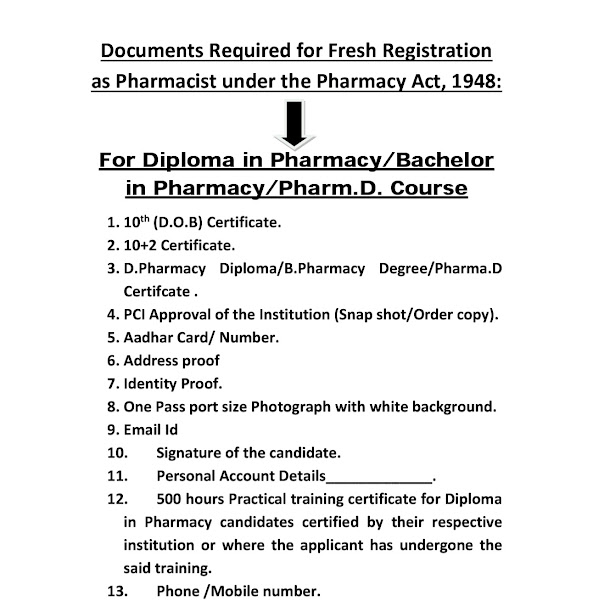
Documents Required for Fresh registration as pharmacist

          14. 3200/- for online registration charge.