Career Opportunities for Pharmacy


Career
 Opportunities for Pharmacy Student

 It is an incredibly exciting time to pursue a career in pharmacy and students graduating from the Texas A&M Rangel College of Pharmacy have a wide-range of career opportunities available to them.  To learn more about these opportunities, please see below.  


The majority of pharmacy graduates become pharmacists but there are also options within academia, regulatory bodies and the pharmaceutical industry
Job options
Jobs directly related to your degree include:
Jobs where your degree would be useful include:
Remember that many employers accept applications from graduates with any degree subject, so don't restrict your thinking to the jobs listed here.
·        Hospital pharmacy
Hospital pharmacists advise health care providers and patients on the safe and effective use of medications and are responsible for choosing, preparing, storing, compounding, and dispensing medications. Other responsibilities include monitoring medication use, implementing hospital regulations related to medication, and other administrative tasks. Individuals interested in hospital pharmacy typically complete a pharmacy residency program and should consider joining the Student Society of Health-System Pharmacists.   


·        Retail pharmacy
The majority of pharmacists work in retail pharmacy.  Retail pharmacists dispense and verify medications, counsel patients on medication use and general health topics, and recommend over-the-counter products. Additionally, depending on the pharmacy, retail pharmacists may vaccinate patients or offer medication therapy management to patients with chronic disorders (e.g., diabetes) or both.  Retail pharmacists manage pharmacy technicians and may choose to pursue a management track.   
·        Independent pharmacy
In addition to the responsibilities described under retail pharmacy, pharmacists working at an independent pharmacy may compound medications and, depending on the size of the pharmacy they own, they may manage finances, order and take inventory of items sold at the pharmacy, manage personnel, make payroll, etc.  Individuals interested in owning a pharmacy should consider the Pharm.D./MBA dual degree program offered by the Texas A&M Rangel College of Pharmacy and joining the National Community Pharmacists Association (NCPA). 

Research scientists can be found in many professional fields, including biology, chemistry, computer science, environmental science, medicine, physics, anthropology, history, political science and sociology. They make hypotheses, collect data, and interpret results in order to answer questions about humans and the natural world. Research scientists work at colleges and universities, for non-profit organizations, government agencies, and private research and development companies. These workers contribute to knowledge in the fields of the natural sciences, medical science, computer science, environmental science and the social sciences.

Education
Master's or doctoral degree in professional field
Job Skills
Naturally curious, analytical, detail-oriented, ability to communicate well orally and in writing
Median Annual Salary (2015)*
$67,640 for environmental scientists; $82,240 for medical scientists
Job Outlook (2014-2024)*
11% growth for environmental scientists; 8% for medical scientists

* Required Education
Research scientists have typically earned master's or doctorate degrees in their specific fields of study, like physics, biology or chemistry. Most research scientists have completed postgraduate degrees in their field. Research scientist positions at colleges and universities generally require Ph.D.s, while master's degrees are sometimes acceptable for jobs in the public and private sectors.
* Skills Required
Research scientists are naturally inquisitive. Their work requires analytical skills and attention to detail in order to design repeatable procedures and record results accurately. Research scientists report their findings in publications and oral presentations, requiring excellent communication and writing skills.
* Career and Economic Outlook
Research scientists earn diverse salaries, based on their areas of specialty and level of experience. In 2015, environmental scientists and specialists earned median annual wages of $67,640, according to the U.S. Bureau of Labor Statistics (BLS). During that same time, medical scientists earned median annual wages of $82,240.
ΓΌ        * Career outlooks
also vary according to the specific fields of research science. According to the BLS, environmental scientists are predicted to have better-than-average job growth of 11% from 2014-2024, and medical scientists are also expected to see average growth during that time at 8%.

·        Clinical  research
QuintilesIMS (NYSE:Q) is a leading integrated information and technology-enabled healthcare service provider worldwide, dedicated to helping its clients improve their clinical, scientific and commercial results. Formed through the merger of Quintiles and IMS Health, QuintilesIMS’s approximately 50,000 employees conduct operations in more than 100 countries. Companies seeking to improve real-world patient outcomes and enhanced clinical trial outsourcing through treatment innovations, care provision and access can leverage QuintilesIMS’s broad range of healthcare information, technology and service solutions to drive new insights and approaches. QuintilesIMS provides solutions that span clinical to commercial bringing clients a unique opportunity to realize the full potential of innovations and advance healthcare outcomes.
Whether you’re beginning or continuing your career as a CRA, this role is an ideal stepping-stone. You’ll have training and development to plan and progress your career in the direction you choose. And you won’t do it alone – you will have dedicated mentoring and receive structured quarterly reviews on performance, promotion and bonus awards.


Award winning and innovative, we’ll give you access to cutting-edge in-house technology, allowing you to work on global projects but with a regional / home state travel remit, so no need for national travel in certain countries. You’ll be building a smart and flexible career with no limits.

While projects vary, your typical responsibilities might include:
Performing site selection, initiation, monitoring and close-out visits, plus maintaining appropriate documentation Supporting the development of a subject recruitment plan  Establishing regular lines of communication plus administering protocol and related study training to assigned sites  Evaluating the quality and integrity of site practices – escalating quality issues as appropriate Managing progress by tracking regulatory submissions, recruitment, case report form (CRF) completion, and data query resolution  You will need to be comfortable collaborating and communicating with a variety of colleagues and customers. Ideally, you will also have a good basic knowledge of applicable clinical research regulatory requirements.

You should have:
A Bachelor's degree in a health care or other scientific discipline or educational equivalent Successful completion of a CRA Trainee Program or at least three months of on-site monitoring experience Alternatively, you should have an equivalent combination of education, training and experience  If you want to make an impact in the global research market, where we are working to make a real difference in patient health, we ask you to apply now and join our team. 

·        Managed care
Managed care pharmacists work directly with other health care professionals to provide medication therapy management, while considering the pharmacoeconomic impact on patients. They provide a broad range of clinical services including monitoring patient safety and outcomes, managing formularies, and patient education. Managed care pharmacists typically work for health plans and pharmacy benefit management companies. Residency opportunities are available to individuals interested in managed care and interested individuals should consider joining the Academy of Managed Care Pharmacy.

·        Industry
There are a broad range of opportunities available to pharmacists in the pharmaceutical industry.  They can participate in research and development, quality assurance, drug information, sales, marketing, regulatory affairs or clinical trials. Individuals interested in working in the pharmaceutical industry typically participate in postgraduate fellowship programs available at many pharmaceutical companies.

Opportunities in Industry department
·        Q/A
·        Q/C
·        Production
·        Material handling
·        Packaging department

·        Consultant pharmacy
Pharmacy consultants typically work with long-term care facilities and review drug regimens, offer pharmacokinetic dosing services, patient counseling, and therapeutic drug monitoring. Long-term care facilitates include nursing homes, mental institutions, home health agencies, hospice care, correctional institutions, rehabilitation centers, and adult day care centers.

·        Academia
Pharmacists interested in training the next generation can pursue a career as faculty member at a college or school of pharmacy. Pharmacy faculty teach, conduct research, participate in public service, precept students, and contribute to patient care. Individuals interested in a career in academia should consider residencies with significant teaching components.

·        Nuclear pharmacy
Nuclear pharmacists compound and dispense radiopharmaceutical for use in medical procedures. Individuals interested in nuclear pharmacy must complete a training program after earning a Doctor of Pharmacy degree and should consider residency programs that focus on nuclear pharmacy.  Students enrolled at the Texas A&M Rangel College of Pharmacy may choose to enroll in an elective nuclear pharmacy rotation in the fourth year of the Pharm.D. program.   

·        Government agencies
The National Institutes of Health, FDA, US Centers for Disease Control and Prevention, US Department of Homeland Security, Federal Bureau of Prisons, Veterans Administration, and Armed Forces all employ pharmacists. Pharmacists working with a governmental agency engage in a wide range of tasks, including patient care, biomedical and epidemiological research, reviewing new drug applications, and developing and administering health care policy.


Coming soon………


Career Opportunities for Pharmacy Student


Career Opportunities for Pharmacy Student


 It is an incredibly exciting time to pursue a career in pharmacy and students graduating from the Texas A&M Rangel College of Pharmacy have a wide-range of career opportunities available to them.  To learn more about these opportunities, please see below.  

The majority of pharmacy graduates become pharmacists but there are also options within academia, regulatory bodies and the pharmaceutical industry

Job options

Jobs directly related to your degree include:
Jobs where your degree would be useful include:
Remember that many employers accept applications from graduates with any degree subject, so don't restrict your thinking to the jobs listed here.
·        Hospital pharmacy
Hospital pharmacists advise health care providers and patients on the safe and effective use of medications and are responsible for choosing, preparing, storing, compounding, and dispensing medications. Other responsibilities include monitoring medication use, implementing hospital regulations related to medication, and other administrative tasks. Individuals interested in hospital pharmacy typically complete a pharmacy residency program and should consider joining the Student Society of Health-System Pharmacists.   


·        Retail pharmacy
The majority of pharmacists work in retail pharmacy.  Retail pharmacists dispense and verify medications, counsel patients on medication use and general health topics, and recommend over-the-counter products. Additionally, depending on the pharmacy, retail pharmacists may vaccinate patients or offer medication therapy management to patients with chronic disorders (e.g., diabetes) or both.  Retail pharmacists manage pharmacy technicians and may choose to pursue a management track.   
·        Independent pharmacy
In addition to the responsibilities described under retail pharmacy, pharmacists working at an independent pharmacy may compound medications and, depending on the size of the pharmacy they own, they may manage finances, order and take inventory of items sold at the pharmacy, manage personnel, make payroll, etc.  Individuals interested in owning a pharmacy should consider the Pharm.D./MBA dual degree program offered by the Texas A&M Rangel College of Pharmacy and joining the National Community Pharmacists Association (NCPA). 

Research scientists can be found in many professional fields, including biology, chemistry, computer science, environmental science, medicine, physics, anthropology, history, political science and sociology. They make hypotheses, collect data, and interpret results in order to answer questions about humans and the natural world. Research scientists work at colleges and universities, for non-profit organizations, government agencies, and private research and development companies. These workers contribute to knowledge in the fields of the natural sciences, medical science, computer science, environmental science and the social sciences.
Education
Master's or doctoral degree in professional field
Job Skills
Naturally curious, analytical, detail-oriented, ability to communicate well orally and in writing
Median Annual Salary (2015)*
$67,640 for environmental scientists; $82,240 for medical scientists
Job Outlook (2014-2024)*
11% growth for environmental scientists; 8% for medical scientists

ΓΌ Required Education

Research scientists have typically earned master's or doctorate degrees in their specific fields of study, like physics, biology or chemistry. Most research scientists have completed postgraduate degrees in their field. Research scientist positions at colleges and universities generally require Ph.D.s, while master's degrees are sometimes acceptable for jobs in the public and private sectors.

ΓΌ Skills Required

Research scientists are naturally inquisitive. Their work requires analytical skills and attention to detail in order to design repeatable procedures and record results accurately. Research scientists report their findings in publications and oral presentations, requiring excellent communication and writing skills.

ΓΌ Career and Economic Outlook

Research scientists earn diverse salaries, based on their areas of specialty and level of experience. In 2015, environmental scientists and specialists earned median annual wages of $67,640, according to the U.S. Bureau of Labor Statistics (BLS). During that same time, medical scientists earned median annual wages of $82,240.
ΓΌ Career outlooks
also vary according to the specific fields of research science. According to the BLS, environmental scientists are predicted to have better-than-average job growth of 11% from 2014-2024, and medical scientists are also expected to see average growth during that time at 8%.


·        Clinical  research
QuintilesIMS (NYSE:Q) is a leading integrated information and technology-enabled healthcare service provider worldwide, dedicated to helping its clients improve their clinical, scientific and commercial results. Formed through the merger of Quintiles and IMS Health, QuintilesIMS’s approximately 50,000 employees conduct operations in more than 100 countries. Companies seeking to improve real-world patient outcomes and enhanced clinical trial outsourcing through treatment innovations, care provision and access can leverage QuintilesIMS’s broad range of healthcare information, technology and service solutions to drive new insights and approaches. QuintilesIMS provides solutions that span clinical to commercial bringing clients a unique opportunity to realize the full potential of innovations and advance healthcare outcomes.
Whether you’re beginning or continuing your career as a CRA, this role is an ideal stepping-stone. You’ll have training and development to plan and progress your career in the direction you choose. And you won’t do it alone – you will have dedicated mentoring and receive structured quarterly reviews on performance, promotion and bonus awards.

Award winning and innovative, we’ll give you access to cutting-edge in-house technology, allowing you to work on global projects but with a regional / home state travel remit, so no need for national travel in certain countries. You’ll be building a smart and flexible career with no limits.

While projects vary, your typical responsibilities might include:
Performing site selection, initiation, monitoring and close-out visits, plus maintaining appropriate documentation Supporting the development of a subject recruitment plan  Establishing regular lines of communication plus administering protocol and related study training to assigned sites  Evaluating the quality and integrity of site practices – escalating quality issues as appropriate Managing progress by tracking regulatory submissions, recruitment, case report form (CRF) completion, and data query resolution  You will need to be comfortable collaborating and communicating with a variety of colleagues and customers. Ideally, you will also have a good basic knowledge of applicable clinical research regulatory requirements.
You should have:
A Bachelor's degree in a health care or other scientific discipline or educational equivalent Successful completion of a CRA Trainee Program or at least three months of on-site monitoring experience Alternatively, you should have an equivalent combination of education, training and experience  If you want to make an impact in the global research market, where we are working to make a real difference in patient health, we ask you to apply now and join our team. 

·        Managed care
Managed care pharmacists work directly with other health care professionals to provide medication therapy management, while considering the pharmacoeconomic impact on patients. They provide a broad range of clinical services including monitoring patient safety and outcomes, managing formularies, and patient education. Managed care pharmacists typically work for health plans and pharmacy benefit management companies. Residency opportunities are available to individuals interested in managed care and interested individuals should consider joining the Academy of Managed Care Pharmacy.

·        Industry
There are a broad range of opportunities available to pharmacists in the pharmaceutical industry.  They can participate in research and development, quality assurance, drug information, sales, marketing, regulatory affairs or clinical trials. Individuals interested in working in the pharmaceutical industry typically participate in postgraduate fellowship programs available at many pharmaceutical companies.
Opportunities in Industry department
·        Q/A
·        Q/C
·        Production
·        Material handling
·        Packaging department

·        Consultant pharmacy
Pharmacy consultants typically work with long-term care facilities and review drug regimens, offer pharmacokinetic dosing services, patient counseling, and therapeutic drug monitoring. Long-term care facilitates include nursing homes, mental institutions, home health agencies, hospice care, correctional institutions, rehabilitation centers, and adult day care centers.

·        Academia
Pharmacists interested in training the next generation can pursue a career as faculty member at a college or school of pharmacy. Pharmacy faculty teach, conduct research, participate in public service, precept students, and contribute to patient care. Individuals interested in a career in academia should consider residencies with significant teaching components.

·        Nuclear pharmacy
Nuclear pharmacists compound and dispense radiopharmaceutical for use in medical procedures. Individuals interested in nuclear pharmacy must complete a training program after earning a Doctor of Pharmacy degree and should consider residency programs that focus on nuclear pharmacy.  Students enrolled at the Texas A&M Rangel College of Pharmacy may choose to enroll in an elective nuclear pharmacy rotation in the fourth year of the Pharm.D. program.   

·        Government agencies
The National Institutes of Health, FDA, US Centers for Disease Control and Prevention, US Department of Homeland Security, Federal Bureau of Prisons, Veterans Administration, and Armed Forces all employ pharmacists. Pharmacists working with a governmental agency engage in a wide range of tasks, including patient care, biomedical and epidemiological research, reviewing new drug applications, and developing and administering health care policy.


Coming soon………

Circuit and type of Circuit

Circuit


In electronics, a circuit is a path between two or more points along which an electrical current can be carried. (A circuit breaker is a device that interrupts the path when necessary to protect other devices attached to the circuit - for example, in case of a power surge.)
A virtual circuit, sometimes called a logical circuit, is a path between two or more points that seems like a fixed physical path, but actually is one path out of many possible physical paths that can be arranged. A permanent virtual circuit(PVC) is a virtual circuit that provides a guaranteed connection between two or more points when needed without having to reserve or commit to a specific physical path in advance. This allows many companies to share a common pool of circuits. This approach is used in a frame relay network and offers a committed set of resources to a telephone company customer at a lower price than if the customer leases their own circuits. A switched virtual circuit (SVC) is similar to a permanent virtual circuit, but allows users to dial in to the network of virtual circuits.

Types Of Electrical Circuits 
There are basicly three types of basic electronic circuits a Series Circuit, Parallel Circuit, and Series Parallel Circuit this is a combination of both series and parallel circuits. 

Series Circuit: A series circuit has more than one resistor (anything that uses electricity to do work) and gets its name from only having one path for the charges to move along. Charges must move in "series" first going to one resistor then the next. If one of the items in the circuit is broken then no charge will move through the circuit because there is only one path. There is no alternative route 

Equivalent Resistance and Current

Charge flows together through the external circuit at a rate that is everywhere the same. The current is no greater at one location as it is at another location. The actual amount of current varies inversely with the amount of overall resistance. There is a clear relationship between the resistance of the individual resistors and the overall resistance of the collection of resistors. As far as the battery that is pumping the charge is concerned, the presence of two 6-Ξ© ;resistors in series would be equivalent to having one 12-Ξ© resistor in the circuit. The presence of three 6-Ξ© resistors in series would be equivalent to having one 18-Ξ© resistor in the circuit. And the presence of four 6-Ξ© resistors in series would be equivalent to having one 24-Ξ© resistor in the circuit.
This is the concept of equivalent resistance. The equivalent resistance of a circuit is the amount of resistance that a single resistor would need in order to equal the overall effect of the collection of resistors that are present in the circuit. For series circuits, the mathematical formula for computing the equivalent resistance (Req) is
  
                                           Req = R1 + R2 + R3 + ...


where R1, R2, and R3 are the resistance values of the individual resistors that are connected in series.

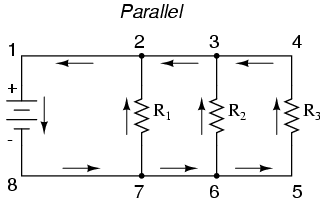
Parallel Circuit: A parallel circuit has more than one resistor (anything that uses electricity to do work) and gets its name from having multiple (parallel) paths to move along . Charges can move through any of several paths. If one of the items in the circuit is broken then no charge will move through that path, but other paths will continue to have charges flow through them. Parallel circuits are found in most household electrical wiring.

Current

The rate at which charge flows through a circuit is known as the current. Charge does NOT pile up and begin to accumulate at any given location such that the current at one location is more than at other locations. Charge does NOT become used up by resistors in such a manner that there is less current at one location compared to another. In a parallel circuit, charge divides up into separate branches such that there can be more current in one branch than there is in another. Nonetheless, when taken as a whole, the total amount of current in all the branches when added together is the same as the amount of current at locations outside the branches. The rule that current is everywhere the same still works, only with a twist. The current outside the branches is the same as the sum of the current in the individual branches. It is still the same amount of current, only split up into more than one pathway.
In equation form, this principle can be written as

Itotal = I1 + I2 + I3 + ...   


where Itotal is the total amount of current outside the branches (and in the battery) and I1, I2, and I3represent the current in the individual branches of the circuit.
Throughout this unit, there has been an extensive reliance upon the analogy between charge flow and water flow. Once more, we will return to the analogy to illustrate how the sum of the current values in the branches is equal to the amount outside of the branches. The flow of charge in wires is analogous to the flow of water in pipes. Consider the diagrams below in which the flow of water in pipes becomes divided into separate branches. At each node (branching location), the water takes two or more separate pathways. The rate at which water flows into the node (measured in gallons per minute) will be equal to the sum of the flow rates in the individual branches beyond the node. Similarly, when two or more branches feed into a node, the rate at which water flows out of the node will be equal to the sum of the flow rates in the individual branches that feed into the node.

The same principle of flow division applies to electric circuits. The rate at which charge flows into a node is equal to the sum of the flow rates in the individual branches beyond the node. This is illustrated in the examples shown below. In the examples a new circuit symbol is introduced - the letter A enclosed within a circle. This is the symbol for an ammeter - a device used to measure the current at a specific point. An ammeter is capable of measuring the current while offering negligible resistance to the flow of charge.

Diagram A displays two resistors in parallel with nodes at point A and point B. Charge flows into point A at a rate of 6 amps and divides into two pathways - one through resistor 1 and the other through resistor 2. The current in the branch with resistor 1 is 2 amps and the current in the branch with resistor 2 is 4 amps. After these two branches meet again at point B to form a single line, the current again becomes 6 amps. Thus we see the principle that the current outside the branches is equal to the sum of the current in the individual branches holds true.
                          

Itotal = I1 + I2
6 amps = 2 amps + 4 amps
Diagram B above may be slightly more complicated with its three resistors placed in parallel. Four nodes are identified on the diagram and labeled A, B, C and D. Charge flows into point A at a rate of 12 amps and divides into two pathways - one passing through resistor 1 and the other heading towards point B (and resistors 2 and 3). The 12 amps of current is divided into a 2 amp pathway (through resistor 1) and a 10 amp pathway (heading toward point B). At point B, there is further division of the flow into two pathways - one through resistor 2 and the other through resistor 3. The current of 10 amps approaching point B is divided into a 6-amp pathway (through resistor 2) and a 4-amp pathway (through resistor 3). Thus, it is seen that the current values in the three branches are 2 amps, 6 amps and 4 amps and that the sum of the current values in the individual branches is equal to the current outside the branches.

Itotal = I1 + I2 + I3

12 amps = 2 amps + 6 amps + 4 amps
A flow analysis at points C and D can also be conducted and it is observed that the sum of the flow rates heading into these points is equal to the flow rate that is found immediately beyond these points.


 Series Parallel Circuit: The type of circuit is a combination of both series and parallel. Electric current travels through both circuits.
With simple series circuits, all components are connected end-to-end to form only one path for electrons to flow through the circuit:

With simple parallel circuits, all components are connected between the same two sets of electrically common points, creating multiple paths for electrons to flow from one end of the battery to the other:


With each of these two basic circuit configurations, we have specific sets of rules describing voltage, current, and resistance relationships.

  • Series Circuits:
  • Voltage drops add to equal total voltage.
  • All components share the same (equal) current.
  • Resistances add to equal total resistance.
  • Parallel Circuits:
  • All components share the same (equal) voltage.
  • Branch currents add to equal total current.
  • Resistances diminish to equal total resistance.
However, if circuit components are series-connected in some parts and parallel in others, we won’t be able to apply a single set of rules to every part of that circuit. Instead, we will have to identify which parts of that circuit are series and which parts are parallel, then selectively apply series and parallel rules as necessary to determine what is happening. Take the following circuit, for instance: 
                                
This circuit is neither simple series nor simple parallel. Rather, it contains elements of both. The current exits the bottom of the battery, splits up to travel through R3 and R4, rejoins, then splits up again to travel through R1 and R2, then rejoins again to return to the top of the battery. There exists more than one path for current to travel (not series), yet there are more than two sets of electrically common points in the circuit (not parallel).
Because the circuit is a combination of both series and parallel, we cannot apply the rules for voltage, current, and resistance “across the table” to begin analysis like we could when the circuits were one way or the other. For instance, if the above circuit were simple series, we could just add up R1 through R4 to arrive at a total resistance, solve for total current, and then solve for all voltage drops. Likewise, if the above circuit were simple parallel, we could just solve for branch currents, add up branch currents to figure the total current, and then calculate total resistance from total voltage and total current. However, this circuit’s solution will be more complex.
The table will still help us manage the different values for series-parallel combination circuits, but we’ll have to be careful how and where we apply the different rules for series and parallel. Ohm’s Law, of course, still works just the same for determining values within a vertical column in the table.
If we are able to identify which parts of the circuit are series and which parts are parallel, we can analyze it in stages, approaching each part one at a time, using the appropriate rules to determine the relationships of voltage, current, and resistance. The rest of this chapter will be devoted to showing you techniques for doing this.

By Hitesh Kushwah (Ex.Branch and Hariom kushwah (EC. Branch) Final year student

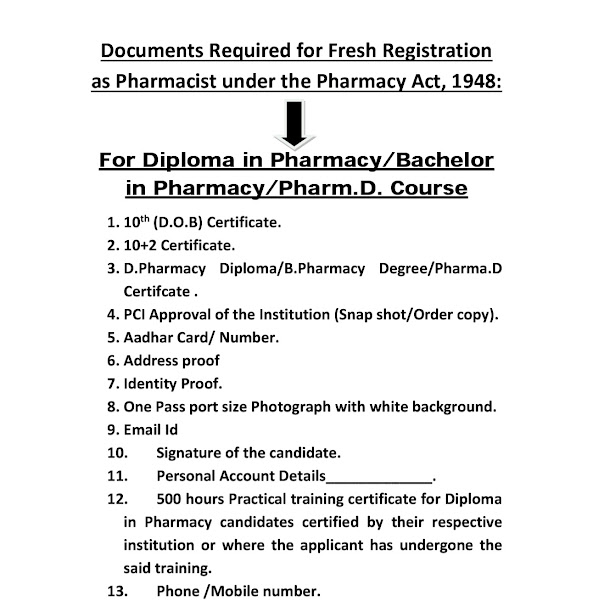
Documents Required for Fresh registration as pharmacist

          14. 3200/- for online registration charge.